Access and Boundaries
For photography, I often find myself in spaces I otherwise wouldn’t see. The camera works as a pass — one that grants access to spaces and situations that might otherwise remain closed. Sometimes that access comes with welcome—sometimes, with compensation. But such welcome is always conditional. There are boundaries between what may be documented and what must remain unseen, and these boundaries are interpreted differently depending on the group and the context.
Ritual Time and the Limits of Documentation
These thresholds become most visible in religious ceremonies. Not long ago, I photographed a Bar Mitzvah—the rite of passage marking a Jewish boy’s entry into the religious community at the age of thirteen. The ceremony’s core is the reading of the Torah. At first, I assumed I could not photograph the actual ritual because of its sacred nature. Later, the rabbi kindly explained that the restriction was related to Sabbath prohibitions against electronics—a detail I had previously only encountered in books but now came to understand more vividly. Instead, I was allowed to photograph the rehearsal two days prior (as the day before might already fall under Sabbath restrictions depending on sunset time) and the celebration afterward, which took place in the evening. From a photographic standpoint, the rehearsal and ceremony were visually indistinguishable, and the outcome was satisfying.
As ‘Matter Out of Place’
There are moments and spaces where photography is seen as being “in place,” and others where it is “out of place.” Mary Douglas wrote, “Dirt is matter out of place”—a phrase that could just as well describe the camera. Its presence must be evaluated in terms of spatial and temporal context. To photograph on the Sabbath is not simply an act of bad manners; it is the camera appearing where it ought not to be—matter out of place.
Privacy and Proclamation in Christian Contexts
In some Christian contexts, particularly in Canada, I’ve observed a common pattern: many churches allow photography of preachers and worship bands but discourage photographing the congregation. This reflects a cultural sensitivity toward revealing religious identity. The stage is a message meant to be shared widely; the congregation is a space of intimate experience and deserves privacy. Faith can be a public declaration, but it is also a deeply personal act. In such cases, the boundary is not temporal but spatial and visual.
Negotiated Spaces in Indigenous Communities
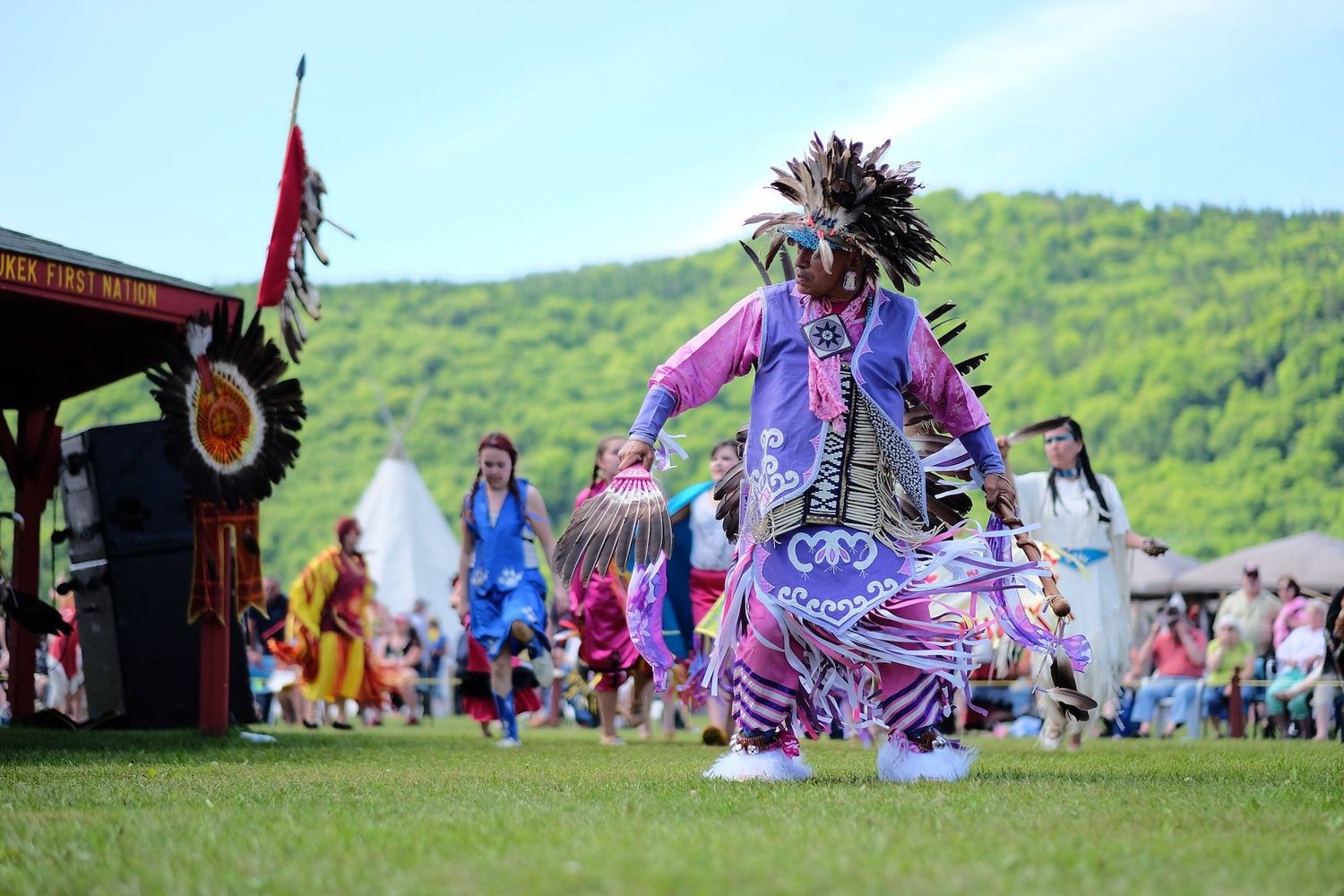
In Indigenous communities, I practice strong photographic ethics. While practices vary across groups, the communities I have worked with generally approach the camera with caution. Sacred moments—rituals, prayers, and sacred fires—are held within the community and not intended for external audiences. By contrast, parades, dances, and regalia are often photographable with consent. The challenge arises when photographers pursue the image they desire without contextual understanding. Permission to photograph a dance is sometimes misconstrued as a license to photograph everything, which can lead to misunderstandings or even conflict. For communities historically objectified by outsiders, photography remains a carefully negotiated space.
Performance, Documentation, and Taboos in Korean Shamanism
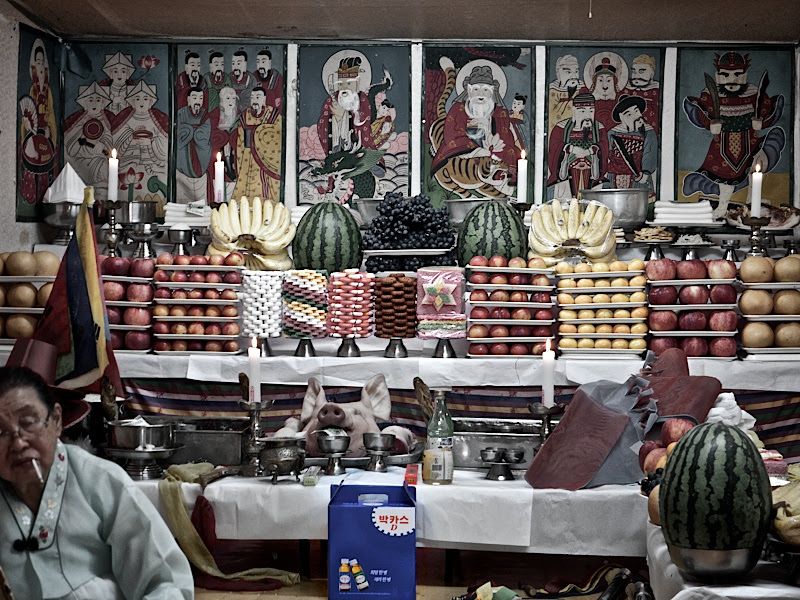
In Korean shamanic rituals, a very different dynamic emerges. Shamans often encourage photography. Gut rituals are traditionally public ceremonies involving the community, and shamans occupy a position close to that of performers. Moreover, Korean shamanism is seen as a vanishing cultural heritage, so documentation is often welcomed. Photography occurs routinely, even during preparations. However, the jegajip—the client requesting the ritual—often prefers not to be photographed. To seek help from shamanism may still be seen as socially marginal or taboo.
The Liminal Position of the Photographer
Photography constantly navigates thresholds, dancing along the edges of what may or may not be shown, who can be represented, and when one should act—or when one should refrain. The photographer occupies a liminal space: fully present, yet expected to be invisible. Not an insider, but someone permitted to observe from within. As the night deepens, we become figures half-included in that world.
The recent Bar Mitzvah I photographed was a truly beautiful experience—humbling and full of meaning. What struck me most wasn’t only the ritual itself, but the way boundaries were explained with kindness and clarity. There was no sense of exclusion, only a gentle request for understanding.
What stayed with me even more was the joy—the kind of joy that springs from deep conviction and belonging. These were people not merely practicing religious obligations, but delighting in them. Faces were lit up with genuine happiness and warmth. Witnessing such unfiltered expressions of spiritual fulfillment—and being trusted enough to stand at the edge of that circle—left a profound impact on me as a photographer.
That is something I hope more photographers can carry with them: walk in knowing where you are. Understanding the meaning behind an event, and showing that you’ve done your homework, isn’t just professional courtesy—it’s a sign of deep respect for the people, the space, and the story unfolding before you.
The best photos don’t come from sneaking a shot—they come from being welcomed into the moment. That welcome is far more likely when you arrive prepared. So here’s to more moments like these—where the camera becomes not just a tool, but a passport to shared understanding.